


Attendance management has evolved far beyond registers and biometric scanners. In today’s fast-moving business and institutional environments, traditional systems no longer meet the demands of scale, accuracy, security, and operational efficiency.
Artificial Intelligence (AI) is redefining how organizations verify presence, monitor workforce activity, and maintain compliance transforming attendance from a manual administrative task into an intelligent infrastructure system.
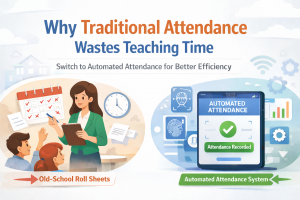
The Problem with Traditional Attendance Systems
For decades, organizations have relied on:
- Manual registers
- Biometric fingerprint scanners
- RFID access cards
- Swipe-based systems
While functional, these systems present serious limitations:
• Time-consuming verification processes
• Physical device dependency
• Proxy punching risks
• Queue formation during peak hours
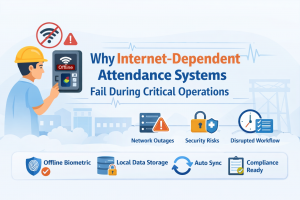
• Internet dependency for cloud processing
• Data security concerns
As organizations scale, these inefficiencies multiply.
Modern enterprises require attendance systems that are faster, smarter, and more secure.
The Shift Toward AI-Based Attendance
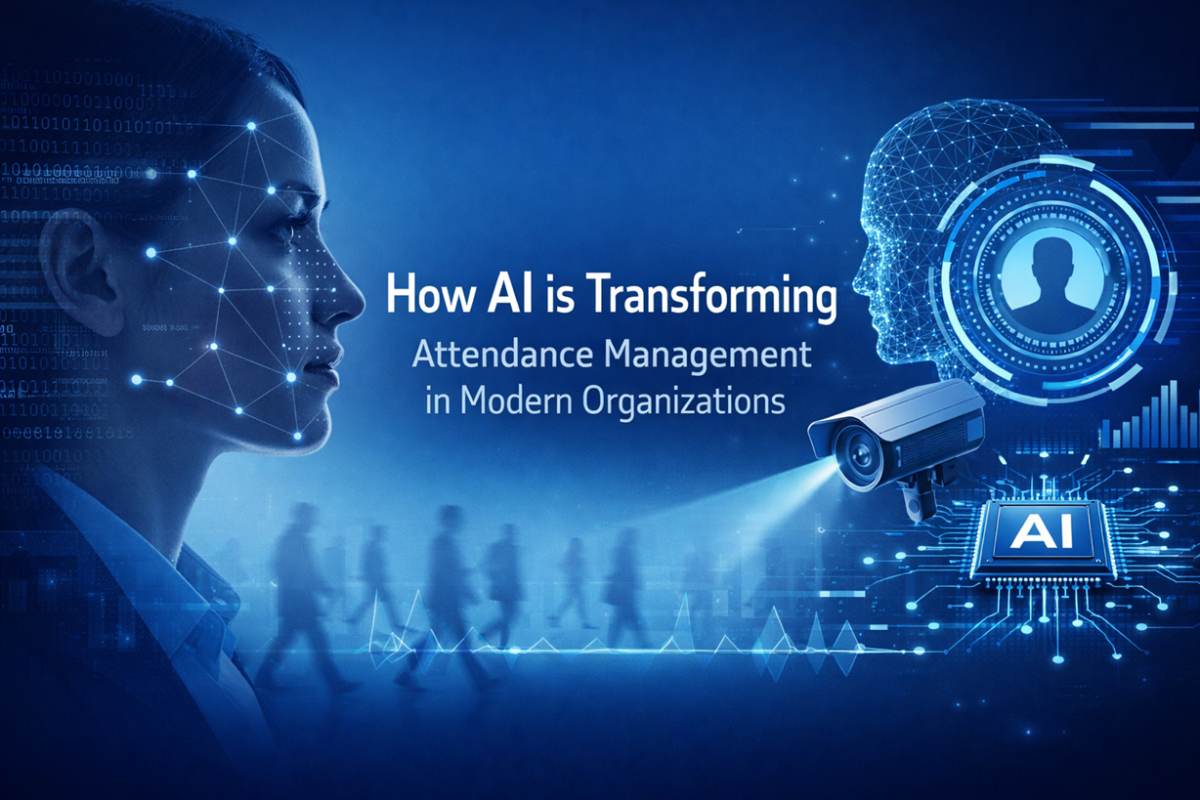
AI-powered attendance systems use facial recognition and intelligent verification algorithms to automate identity authentication in real time.
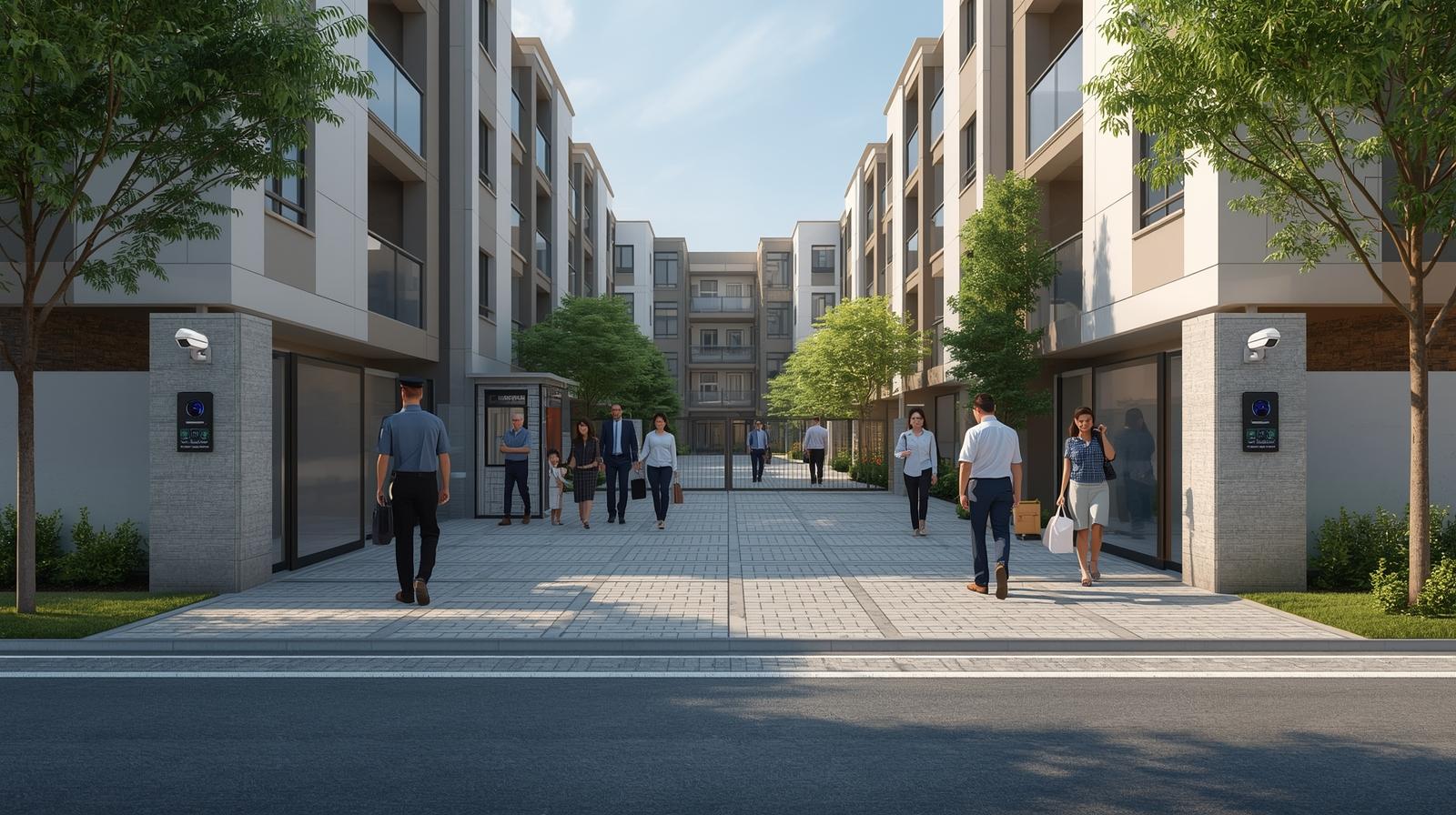
Instead of touching a device or swiping a card, individuals simply walk through an entry point. AI verifies identity within seconds and logs attendance automatically.
No manual intervention.
No delays.
No operational disruption.
This shift changes attendance from a checkpoint process to a seamless background operation.
Real-Time Identity Verification
One of the biggest advantages of AI attendance systems is real-time recognition.
Advanced facial recognition models:
- Identify individuals in under a second
- Adapt to masks, glasses, and lighting variations
- Handle side angles and movement
- Recognize multiple individuals simultaneously
This makes AI particularly powerful in:
- Corporate offices
- Manufacturing facilities
- Hospitals
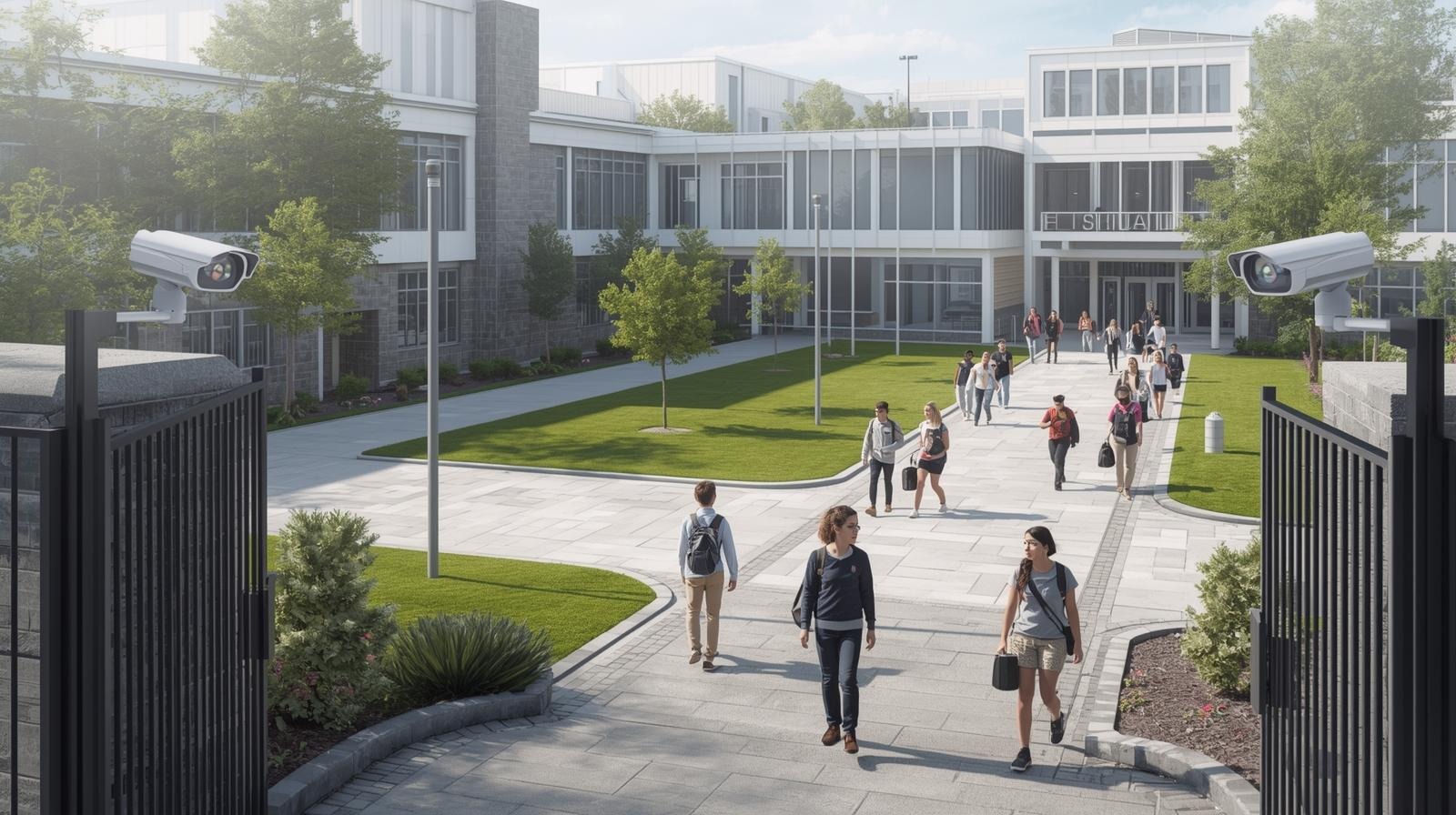
- Educational campuses
- High-traffic industrial environments
The result? Faster entry flow without compromising accuracy.
Eliminating Proxy Attendance
Proxy attendance is a persistent issue in both workforce and academic environments.
Traditional systems allow:
- Card swapping
- Fingerprint misuse
- Manual manipulation
AI eliminates this vulnerability by validating actual physical presence using facial identity matching.
Because the system verifies a real face in real time, impersonation risks are drastically reduced.
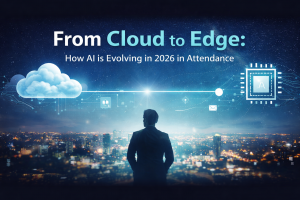
Edge Computing: The Game-Changer
One of the most important advancements in AI attendance technology is edge-based processing.
Instead of sending data to external cloud servers for recognition, edge architecture processes attendance locally on secure on-premise infrastructure.
This delivers:
• Faster recognition speeds
• No dependency on constant internet connectivity
• Higher data privacy control
• Reduced exposure to third-party servers
• Greater compliance readiness
For organizations operating in mission-critical environments, edge processing ensures uninterrupted performance even during network outages.
AI-Driven Analytics & Workforce Intelligence
AI attendance systems do more than just mark presence.
They provide actionable insights such as:
- Late arrival trends
- Overtime tracking
- Absentee patterns
- Shift performance visibility
- Multi-location workforce analytics
HR teams gain real-time dashboards instead of static records.
This transforms attendance data into strategic decision-making intelligence.
AI in Educational Institutions
In classrooms and universities, AI automates attendance without interrupting lectures.
Instead of manual name verification or physical registers:
- Classroom cameras capture structured frames
- AI identifies enrolled students
- Attendance aligns automatically with subject and timetable
Teachers focus on teaching.
Students remain engaged.
Records remain accurate.
AI removes administrative friction from academic environments.
Security and Compliance in the AI Era
Attendance data is sensitive. Modern AI systems are built with security-first architecture.
Best practices include:
- Encrypted biometric storage
- Role-based access control
- On-premise deployment options
- Audit-ready reporting
- Compliance-aligned data handling
When implemented responsibly, AI enhances both efficiency and data protection.
The Future of Attendance Management
Attendance is no longer just about marking presence.
It is about:
- Identity validation
- Infrastructure control
- Workforce transparency
- Operational continuity
- Data-driven insights
AI transforms attendance into an intelligent operational layer working silently in the background while organizations focus on performance and growth.
Conclusion
As organizations modernize their operations, attendance systems must evolve alongside them.
AI-powered attendance delivers:
✔ Faster verification
✔ Higher accuracy
✔ Reduced administrative burden
✔ Enhanced security
✔ Scalable infrastructure
The shift from manual systems to intelligent automation is no longer optional it is a strategic move toward operational efficiency.
The future of attendance is not manual.
It is intelligent.
It is automated.
It is AI-driven.
Comments
Loading comments...